


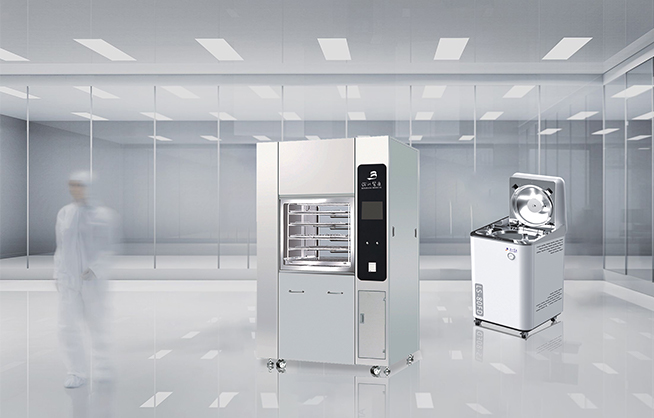
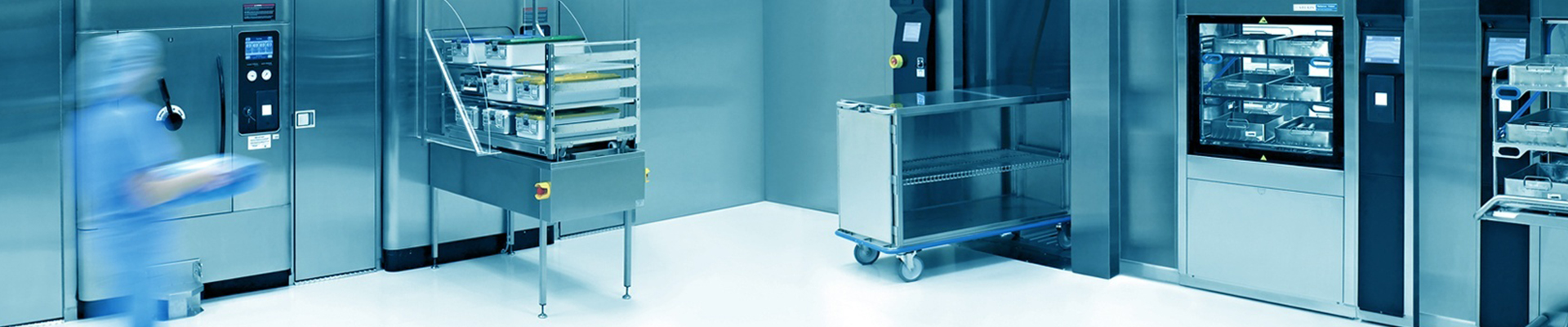
Why is autoclaving typically performed at 121°C and 134°C?
Autor: Admin | 11 Jun
 In the fields of medicine, scientific research, and pharmaceuticals, pressure steam sterilization is critical to maintaining sterile environments. The successful execution of this technology depends on precise control of key parameters such as temperature, time, and steam saturation. International standards including the United States Pharmacopeia (USP), the European Pharmacopoeia (EP), and ISO 17665 all designate 121°C as the standard temperature for moist heat sterilization. This temperature is globally recognized as the gold standard for sterilization, ensuring consistency and reproducibility of sterilization outcomes worldwide.
So why is 121°C chosen as the sterilization temperature, rather than 120°C or 122°C?
The Origins of 121°C: Pressure, Steam, and the Boiling Point of Water
This choice is rooted in the relationship between the boiling point of water and steam pressure. The first autoclave was introduced in 1879. Due to the technological limitations of the time, temperature sensors were unavailable, and the sterilization process could only be monitored through pressure gauges. Under standard atmospheric pressure, water boils at 100°C. When pressure is raised to 2 atmospheres, the boiling point of water approaches 121°C — and this is where the original connection between 121°C, pressure, and the boiling point of water was established.
The 250°F temperature commonly used for sterilization in the United States is closely related to 121°C. At 1 standard atmosphere, water boils at 100°C, and as pressure increases, so does the boiling point. At 2 standard atmospheres, the boiling point rises to 121.1°C. Using the conversion formula (°C = (°F − 32) ÷ 1.8), 250°F converts to approximately 121.1°C.
Why Steam at 121°C Is So Effective
At 121°C, steam reaches an enthalpy of 2,700 kJ/kg, far exceeding that of air or water at the same temperature. This provides exceptional heat transfer capability. When steam contacts an object's surface, the latent heat it releases rapidly raises the object's temperature. The high temperature destroys the protein structures of microorganisms, while the moist heat environment enhances the penetration of water molecules through cell walls, damaging microbial enzymes and genetic material. This is why moist heat sterilization is more effective than dry heat sterilization.
In an autoclave, the saturated steam pressure corresponding to 121°C is 2.1 atmospheres, which enhances steam's penetrating power and allows it to reach deep into complex structures for thorough sterilization. By comparison, at 120°C the pressure is lower, resulting in insufficient heat content and penetration — which reduces sterilization efficiency. At 122°C, sterilization efficiency is higher, but the increased pressure demands place greater stress on equipment and materials, potentially damaging heat-sensitive items.
When 121°C Is Not Enough: The Case for 134°C
In certain high-risk environments, higher temperatures may be required to achieve more thorough sterilization. When highly heat-resistant microorganisms are encountered that cannot be fully eliminated at 121°C, the rapid sterilization method at 134°C serves as an effective complement.
Why 134°C? Because when pressure is raised again to 3 atmospheres, the boiling point of water rises further — typically reaching around 134°C. This temperature significantly shortens sterilization time, making the entire process more efficient. At 134°C, sterilization typically takes only 3 minutes to destroy the vast majority of microorganisms, including more resilient bacterial spores. The greatest advantage of rapid high-temperature sterilization at 134°C is its ability to completely eliminate microorganisms in a very short time, making it especially suitable for medical instruments and laboratory consumables that require rapid turnaround. However, this high-temperature sterilization places greater demands on the materials being processed, and special attention must be paid to heat resistance to avoid damage caused by the elevated temperature.
Additionally, different regions have varying requirements for sterilization performance and equipment tolerance. As a result, 121°C is most commonly used in the United States, while 134°C is more frequently used in Europe.
Choosing Between 121°C and 134°C
Overall, the scientific rationale behind the temperature choices in pressure steam sterilization technology comes down to matching the method to the need. 121°C is suitable for the majority of routine sterilization tasks — the process takes longer, but delivers stable and reliable results. 134°C is suited for scenarios requiring rapid sterilization — the higher temperature means a shorter sterilization time. Whether 121°C or 134°C, the choice is guided by microbial kill efficiency and material compatibility. Both represent a balanced outcome that weighs applicability against sterilization performance.
[Reposting Declaration]
The copyright belongs to the original author. We pay tribute to the original author! If a media or individual does not wish to have their content reprinted, they can contact us and we will immediately remove it! Thank you!
Pošlete nám e -mail
Kontaktujte nás
+86-510-86270699
 Soukromí
The information provided on this website is intended for use only in countries and jurisdictions outside of the People's Republic of China.
Soukromí
The information provided on this website is intended for use only in countries and jurisdictions outside of the People's Republic of China.
 Ochrana osobních údajů